A Habit Coach
On track for launch next week (unless app store reviewers deem otherwise)
Most nutrition apps begin and end at calorie tracking with a daily calorie target. And largely, this hasn't worked. Over a billion people have downloaded a nutrition app and over 90% of them stop using the app within the first two weeks. One reason is that logging is high friction. But I don't think that's the whole story. A calorie tracker is reactive (you only learn after you've eaten), reductive (a 600-calorie burrito bowl and a 600-calorie ice cream sundae get the same green checkmark), punitive (you're tracking what you did wrong against a budget), and fragile (one missed log resets the streak).
Spend ten minutes on MyFitnessPal's forums and you'll see it: Someone three days from a 100-day streak, missing one day, watching it reset to zero. Someone dreading the "log your dinner" notification because they just ate Domino's and don't want to face it. Threads titled calorie counting is making me anxious and obsessive, with hundreds of replies that all rhyme: yes, same, I had to stop entirely.
Hobbes is built on a different foundation. We spent months in the nutrition and habit-formation research and have tried to build the best personal nutrition coach. A good coach doesn't count calories - they build a plan around your specific goals and your health context. They start you small and build from there. They speed you up when you're crushing it and ease off when you're struggling. They're encouraging without being pushy and empathetic when you miss.
That's what Hobbes is trying to be.
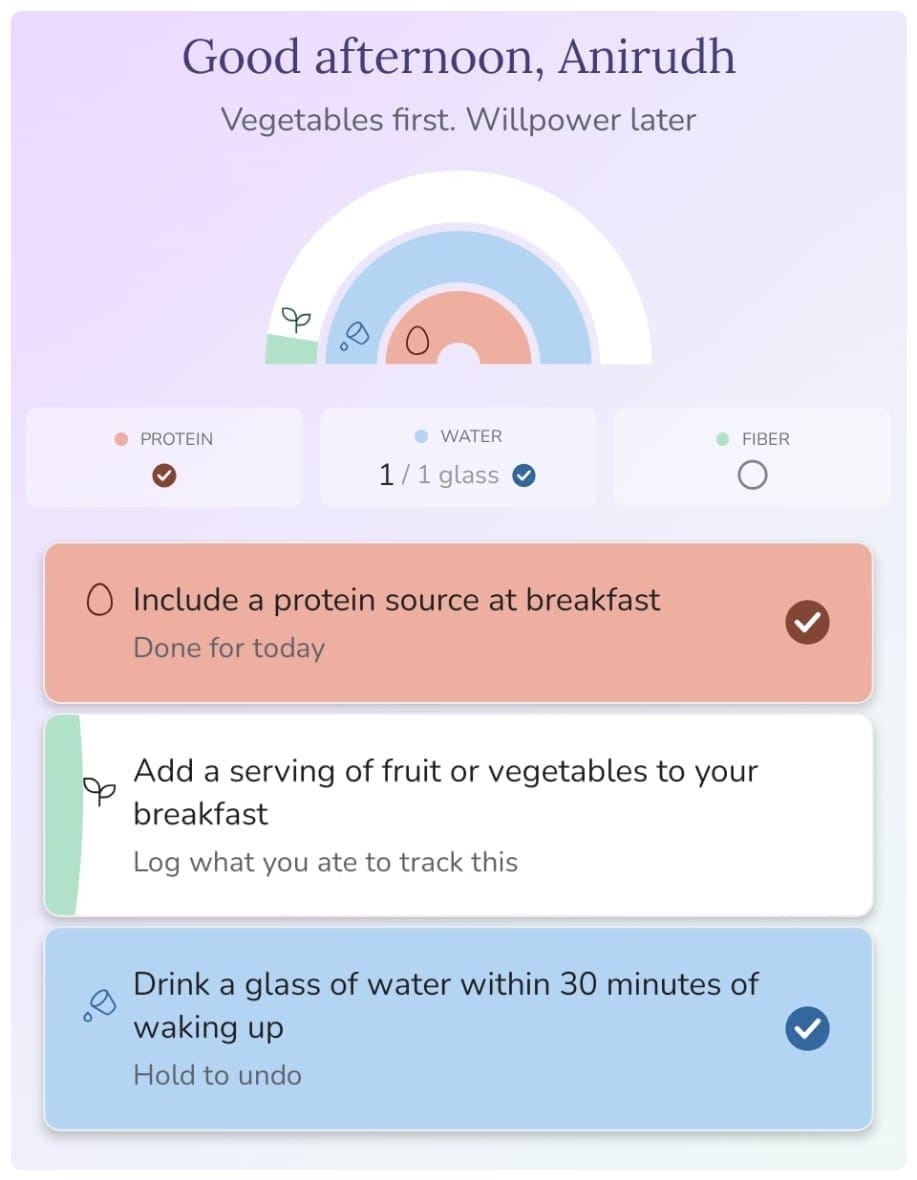
Personalized to you. Hobbes builds your plan around your age, gender, health goals, pre-conditions, and a few other things about you. The plan is organized around four pillars: protein, fiber, healthy fats, and hydration; and each habit step you see has been chosen for you. When the app explains why a habit matters, the reasoning is tied back to your goals.
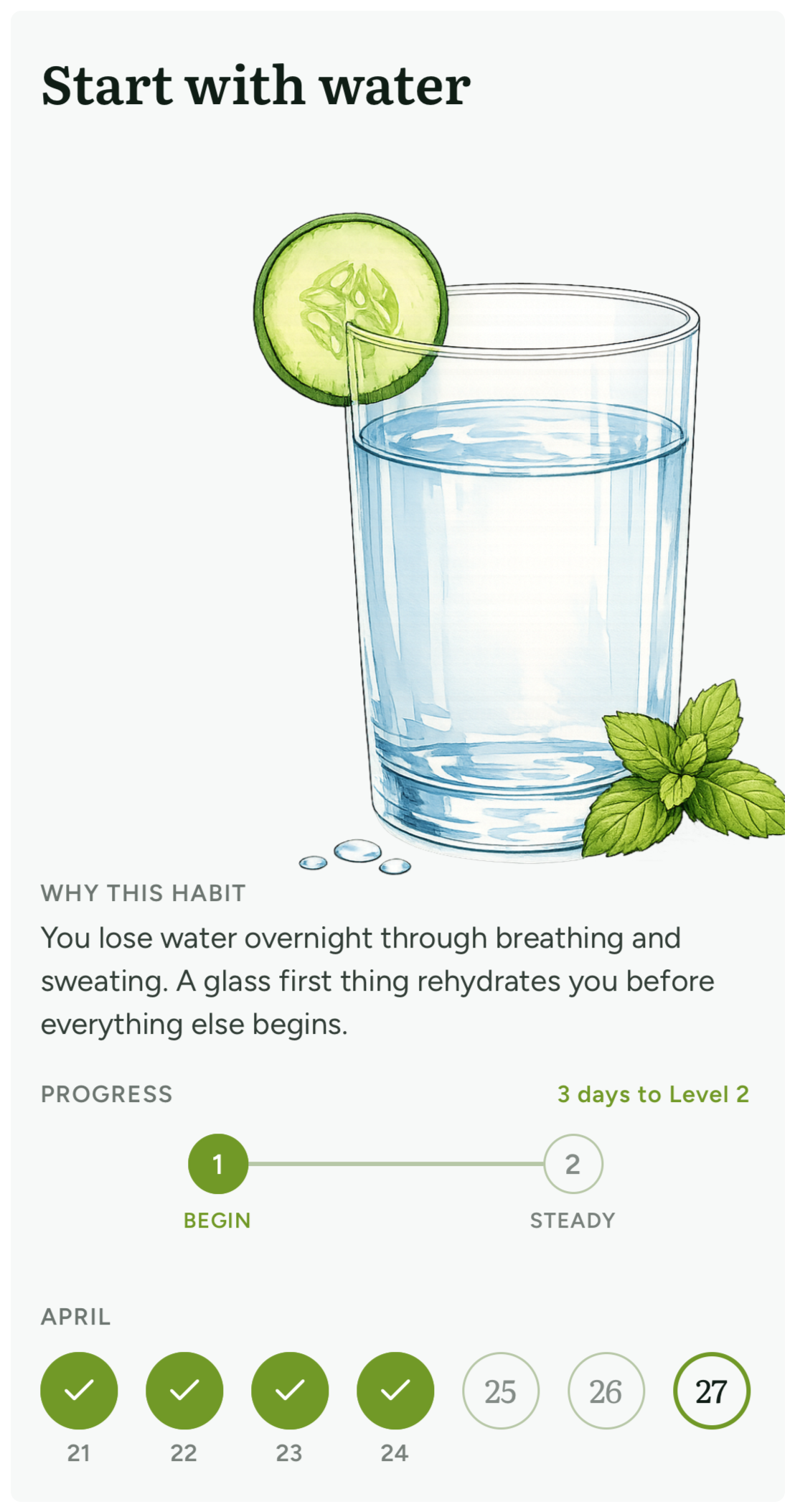
Starts small and builds. The first habit might be drinking a glass of water when you wake up. Or adding a protein source to one meal. These are small on purpose. The system graduates you through habits over time, building from foundations rather than asking you to overhaul your eating overnight.
Adapts to your pace. This is the part I think matters most and gets the least credit elsewhere. If you're knocking a habit out of the park, Hobbes accelerates you to the next step. If you're struggling, it gives you the option to swap the habit or pause it.
Encouraging, never punitive. Hobbes doesn't shame you when you miss. One of our beta testers told me that completing a Hobbes habit feels like checking off a todo - there's a small hit of I did that. With calorie tracking, even on a good day, there's nothing to check off. You just stayed under a number. One feels like progress. The other feels like restraint.
Knows you when you have questions. Standing at a menu wondering if the salmon bowl fits your goals? Holding a protein bar in the grocery aisle? You can ask Hobbes, and it answers based on what it knows about you - your goals, your habits, what you've been eating - not generic advice.
Counting calories is reactive, reductive, punitive, and fragile. That's why Hobbes doesn't lead with calories. Hobbes is the 'couch-to-5k' of nutrition, and I think this version of nutrition coaching is actually worth showing up for.