Chat with Hobbes
Hobbes launches in about 4 weeks. Between now and then, I want to share how the app works and the thinking behind it. Hobbes is your wellness coach and we are starting with nutrition. One of the most important parts of nutrition is logging what you eat. This post is about how I thought about this problem.
What would meal logging look like if it felt natural? Natural does not mean just a chat interface. It should be more than that - it should handle the messy, shorthand ways that people actually think about what they ate.
In most diet apps, when you eat something, you open the app, search for each item, pick a serving size, select the meal type, and repeat. Do this three or four times a day, every day, and it feels like you're filling out expense reports every time you eat.
In Hobbes, you log your meals the way you would tell a friend:
"Had oatmeal with blueberries and peanut butter in the morning, a turkey sandwich and apple for lunch, and grilled chicken with rice just now."
All your meals. One message. Done in seconds.
I do not think most people quit tracking because they do not care. I think they quit because the process is tedious. Removing that friction changes whether someone sticks with it, and consistency matters more than perfection.
Hobbes understands how people actually talk about food. In real life, nobody describes every meal from scratch. We rely on memory, context, and shorthand. We say things like: "Same as yesterday's breakfast", "My usual breakfast", "Dinner leftovers for lunch", "Same as yesterday's breakfast, but non-fat Greek yogurt instead of regular yogurt", "I skipped lunch", "Actually, that was for lunch".
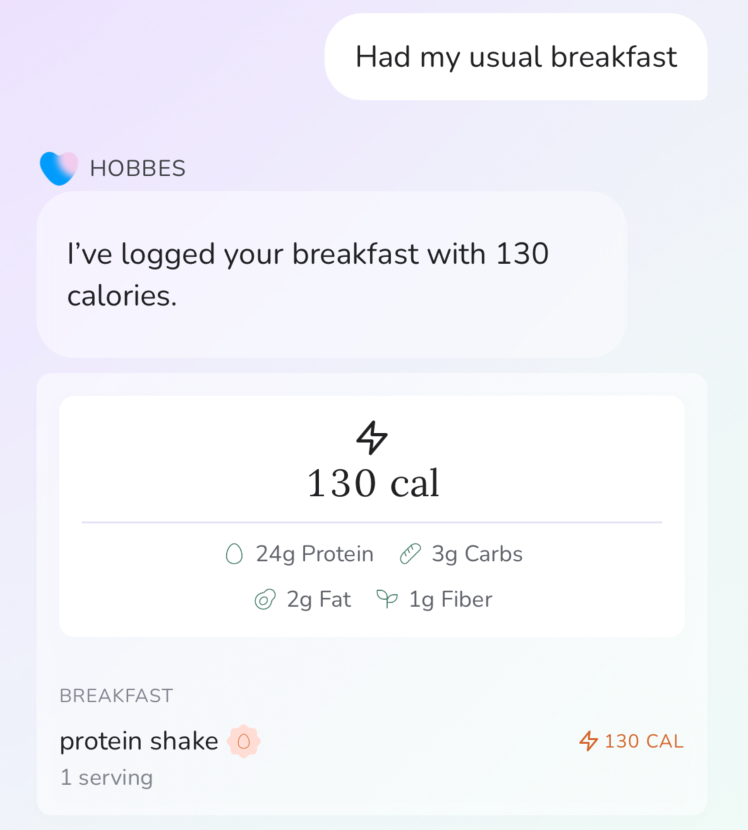
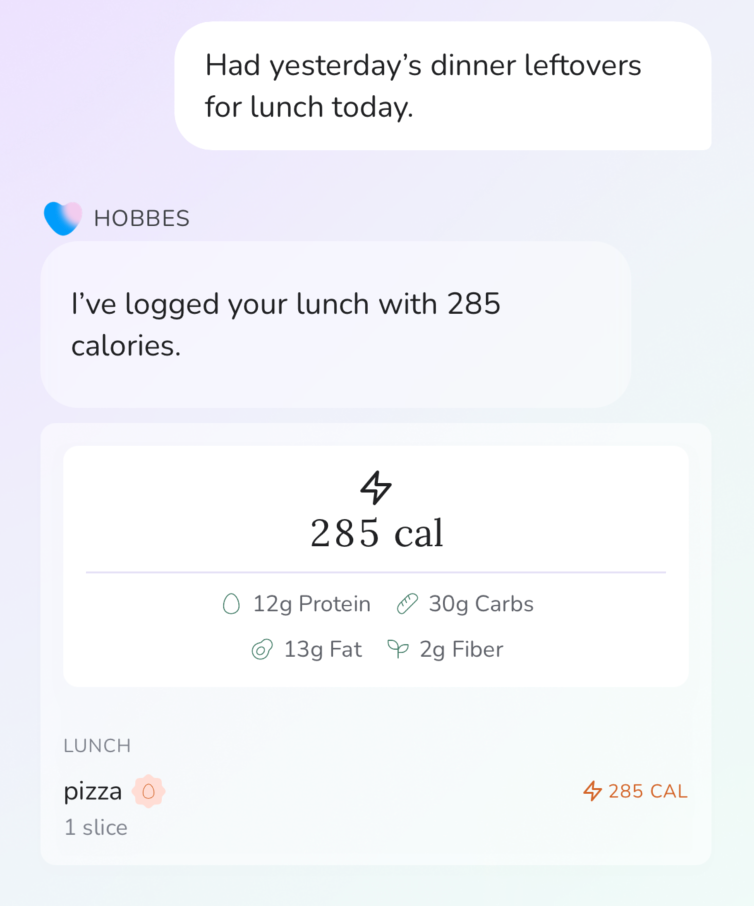
Those phrases are effortless in conversation. But in most tracking apps, they do not fit the system. The app wants a fresh search every time. In Hobbes, they just work.
Hobbes understands that natural does not mean imprecise. This is the part people are right to be skeptical about. If you are just typing casually, how do you know the nutrition data is accurate?
I did not want to rely solely on an AI model to estimate calories and macros. Behind the chat interface, Hobbes maps what you say to trusted nutrition databases. You get real calorie and macro data, not just an LLM's best guess. The conversation is the interface. It is not the entire system.
Hobbes knows that logging meals means that your coach gets smarter. This is the part that I am most excited about.
You can ask ChatGPT "is oatmeal a healthy breakfast?" and get a decent generic answer. But it does not know that you are trying to improve your cholesterol, that you have been consistently low on protein, or that you had oatmeal four times last week and might benefit from more variety.
You can open MyFitnessPal and see your calorie totals. But you cannot ask it "am I eating better this week than last week?" and get a real answer.
Hobbes can do both because your meals, your goals, and your health context all live in the same place. So when you ask "what should I eat for dinner tonight?" the answer takes into account what you have already eaten today, what your nutrition targets look like, and what you actually enjoy eating. When you ask "how much protein do I really need?" the answer is grounded in your specific goals and conditions, not a generic recommendation.
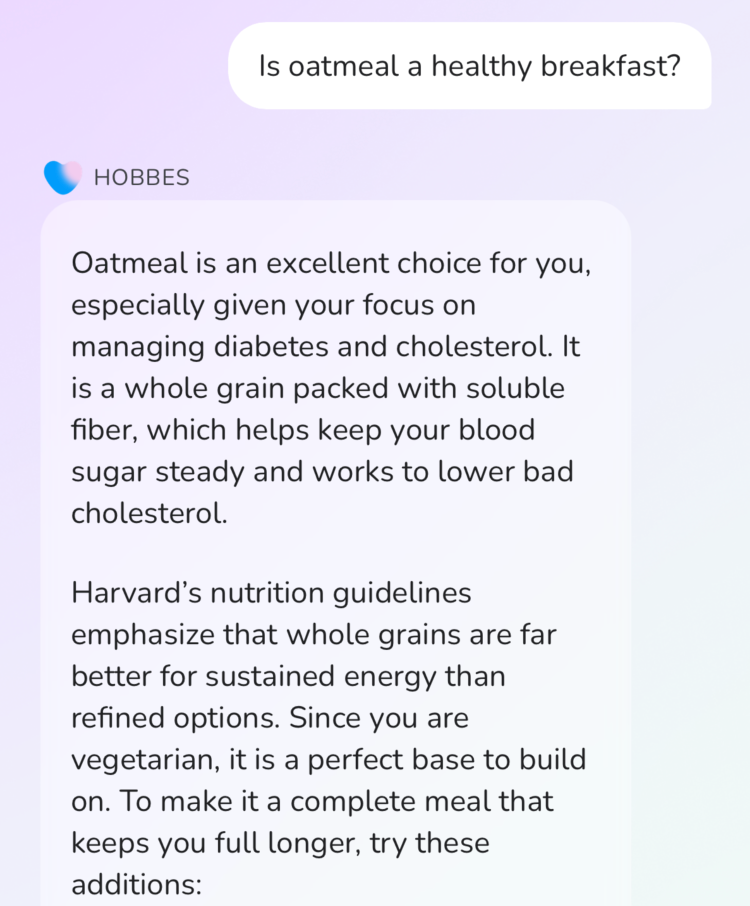
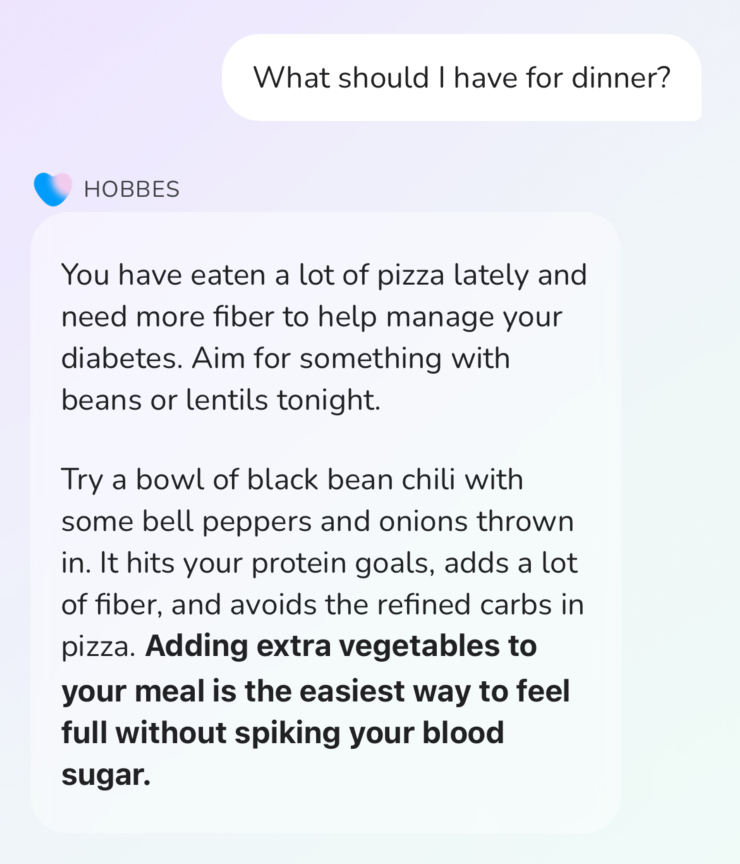
That is the difference between a tracking app that stores your data and a coach that actually knows you.
That is the bet I am making with Hobbes. If the interface feels natural, people use it more honestly and more often. And if people track consistently, the product can do something valuable in return: notice patterns, answer real questions, and help you make better choices.